

Notes from The Closing of the Western Mind by Charles Freeman (pt 3)
As we move into the 4th century, bishops of the churches under Constantine are welcomed into the overall structure of governance. This move not only gives them authority in their jurisdictions, usually center in the city, but it also gives them great wealth and status. Bishops in the metropolitan city-states were given considerable authority akin to governmental authority- the most influential of which is the ability to free slaves. p.205
Bishops also had the power to uphold the laws adopted according to Nicene orthodoxy. Furthering the adoption and integration of religion into the patriarchal structure of the Roman empire.
Keep in mind that as the Bishops were becoming more powerful and influential in the city-states, in Rome they were still marginalized or on the fringes of power and governance. The political power in Rome still rested with the pagan aristocrats of the senate. Here they followed the old ways and were active in maintaining the temples and altars of their gods and goddesses. As such they are able to maintain and uphold the value and virtue of discussion and the intellectual skill of debate. This was true in other areas of the Empire of course, but not as concentrated in governance as it was in Rome.
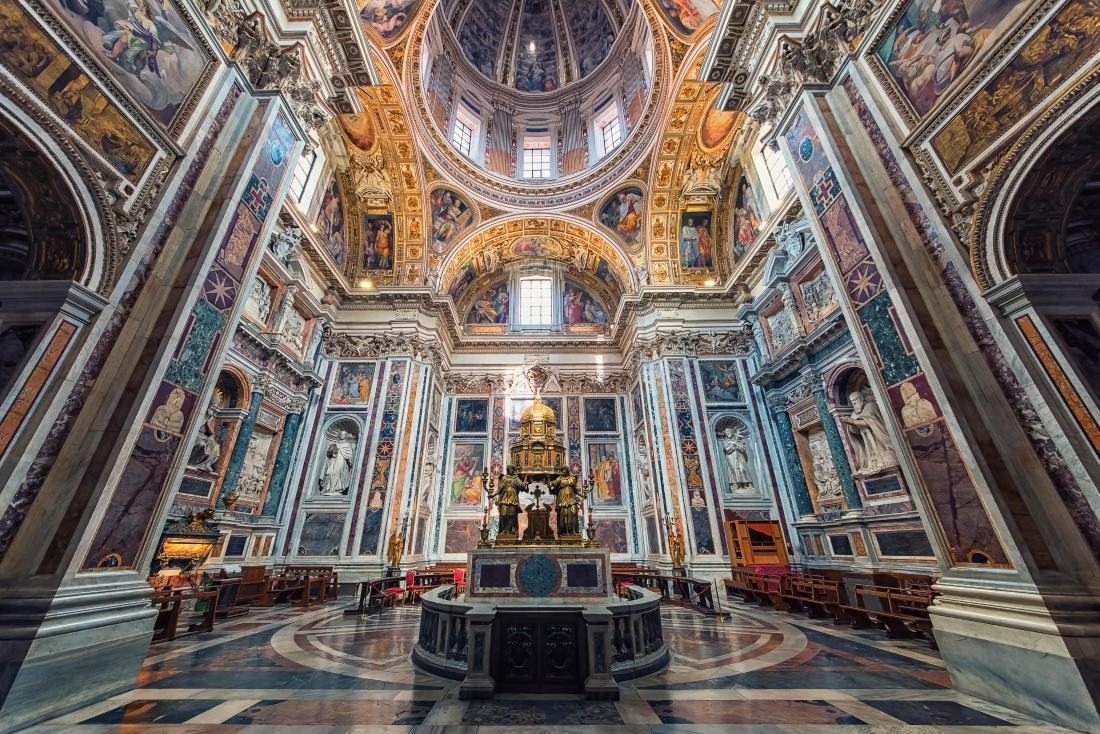
In other areas to the North as churches acquired resources, Basilicas became the literal architecture of the blending of church and state. Basilicas were large and some served as meeting houses of governance as well as places of worship. The new churches became the symbol on earth of heaven, with all of the opulence and riches on display, in order to inspire the congregation to strive toward the virtues of heaven. However, the wealth being poured into the construction of such churches placed a great burden on the population and its resources. p 210
To keep the poor quiet pagan/Roman tradition put on “bread and circuses”. This tradition was shifted under Constantine to allow bishops to distribute food to the poor thus engendering broad support for them. Church leaders were also increasingly members of the elite class and were educated and gifted orators. These bishops were able to persuade and inspire their congregations. They were no longer the “ordinary men” of Christ’s disciples.
This influence, along with the desire for control of surplus in taxes and other contributions, became a destructive force in the politics of the church. However, with these changes, the threat to the empire of those church leaders who renounced wealth, status and political power was taken care of. The church leaders, the bishops, were now some of the wealthiest and most powerful statesmen in their regions. No longer a threat to, but supporters of, the system.
As stated above, pagan rituals and rites were still taking place and gods and goddesses honored, especially by the elites of Rome. Traditional families, honoring their old ways were still common into the late 4th century. Remember though that Paul’s influence was still building and quite strong during this time. His message of rejection of all pagan gods and symbols had a strong influence in Rome where these families were still holding to pagan traditions. p 229
There was significant pressure from leaders and bishops to convert to Christianity.
Yet, there were still voices such as Symmachus, prefect of Rome, who wrote to prevent the removal of the pagan altars as they were symbolic of a diversity of the spiritual world and the freedom of thought that it allowed. He was an advocate for move than one path to truth. This is a voice at a significant turning point, what a loss this diversity and freedom tuned out to be.
A final message from Oracle at Delphi p232
Go tell the King
Apollo’s lovely hall
Is fallen to the ground. No longer has the god
His house, his bay-leaf oracle, his singing stream.
The waters that spoke are stilled.
By the 5th century Christianity was dominant in Rome.
Note: These musings are part of a larger writing project and are not complete in and of themselves.


